About 1,563 minutes
Nazi conspiracy and aggression, Volume 02 (of 11) — A Closer Reading
World Events
359,294 recorded words. 88 minutes difference from this book's estimate.
View Gutenberg source #56213
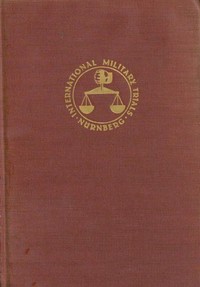
Nazi conspiracy and aggression, Volume 03 (of 11) — Story, Setting & Ideas can be approached with a clearer sense of reading commitment from its source measurements: 339,181 words, 24 hr 35 min estimated reading time, and 52 detected text sections.
The text analysis averages about 20.9 words per sentence, while the detected sections provide another way to judge how the source is divided.
Project Gutenberg metadata also associates the work with “Nuremberg Trial of Major German War Criminals, Nuremberg, Germany, 1945-1946,” connecting these edition facts with the source record’s subject description.
Explore this collection
These alternatives are selected using recorded categories and estimated reading time.
About 1,563 minutes
World Events
359,294 recorded words. 88 minutes difference from this book's estimate.
View Gutenberg source #56213About 1,706 minutes
World Events
392,326 recorded words. 231 minutes difference from this book's estimate.
View Gutenberg source #55368About 865 minutes
World Events
198,807 recorded words. 610 minutes difference from this book's estimate.
View Gutenberg source #10147Search stored excerpts and compare books → Choose by your preferences →
Choices use stored catalog measurements. Estimates vary with reading speed. A shared category is a catalog label, not a claim that two books have the same argument or literary quality.
Search reads excerpt text stored with this catalog and links to its associated Gutenberg record. The connection is stored in the site database; this tool does not recheck that every excerpt is word-for-word identical to that external record. Excerpt search does not cover every chapter and does not verify historical publication dates.
Catalog snapshot checked: 2026-09-25. Coverage: 91 public books, 91 available source excerpts.
Read the complete public-domain text at its original source.
Read on Project GutenbergVolume III of the Nuremberg prosecution's documentary collection arranges 52 exhibits in numerical order, from document 001-PS through 1406-PS. The excerpts reveal two distinct administrative voices: one issuing a secret memorandum on Jewish possessions in France under the Führer's order, another detailing camp procedures for Soviet prisoners of war. The latter includes precise instructions for segregating prisoners by political reliability, with the Reichsführer SS providing special security police details for the task. These documents were prepared by American and British prosecuting staffs for the International Military Tribunal at Nürnberg.
The volume's contents list shows documents numbered sequentially, but the excerpts indicate that the documents themselves are not merely numbered exhibits—they are translations of original German records. The transcriber's note warns that the volume contains translations from original German documents and may contain translation or spelling errors. Asterisks denote missing or illegible words. This volume is one of eleven, with links to Volumes I and II provided. The catalog subjects list the Nuremberg Trial, war crime trials, World War II atrocities, and German politics, but the excerpts focus on specific administrative procedures rather than broad historical narrative.
A lengthy excerpt from a document on Soviet POWs outlines a tiered system: deserters were to receive certificates promising special treatment, then be segregated from other prisoners. Politically undesirable persons, officers, politically harmless persons, and politically especially reliable persons were to be separated. The Reichsführer SS made special details of security police and security service available to segregate by political attitude. These details were directly under the chief of the security police and had been specially trained. They were instructed to work in closest cooperation with camp commandants. The document also permits delivering musical instruments, supplying well-heated rooms, and providing appropriate literature for certain minorities, and allows half-hour prayer sessions for Mohammedan prisoners.
Document 001-PS, a secret memorandum for the Führer, concerns Jewish possessions in France. It notes that many Jewish dwellings remained unguarded, leading to consequences not fully shown in the excerpt. Another document restricts religious practices for prisoners of war: it forbids bringing in clergy who are not prisoners of war and prohibits distributing religious writings. However, it permits a captured priest or lay-priest at burials. These details illustrate how the prosecution selected documents that reveal both the seizure of property and the control of religious life under Nazi policy.
Readers should approach this volume as a curated selection of evidence, not a continuous history. The documents are arranged numerically, not chronologically or thematically, so cross-referencing with other volumes may be necessary. The original spelling is retained, and translations may contain errors. The asterisks marking illegible words remind us that these are fragments of a larger bureaucratic apparatus.
People forget the Nuremberg documents were just paper—orders about property, about prisoners—yet they carry a weight no shelf can hold. Strange, then, how often I think of Up The Slot: Marines in the Central Solomons — Themes and Context beside them. Both are records of men doing terrible, necessary things in places far from home, and both whisper the same old truth: war is never tidy, and the ink outlives the shouting.
Capture what you thought, learned, and would like to remember.