About 39 minutes
Cudjo's own story of the last African slaver — A Closer Reading
Modern Nations
8,931 recorded words. 4 minutes difference from this book's estimate.
View Gutenberg source #73715
The catalog record for A History of the Army Experience of William A. Canfield — Key Ideas to Explore provides practical reading context through 9,817 words, 43 min estimated reading time, and 1 detected text section.
The text analysis averages about 20.5 words per sentence, while the detected sections provide another way to judge how the source is divided.
Project Gutenberg metadata also associates the work with “United States -- History -- Civil War, 1861-1865 -- Personal narratives,” connecting these edition facts with the source record’s subject description.
Explore this collection
These alternatives are selected using recorded categories and estimated reading time.
About 39 minutes
Modern Nations
8,931 recorded words. 4 minutes difference from this book's estimate.
View Gutenberg source #73715About 36 minutes
Modern Nations
8,132 recorded words. 7 minutes difference from this book's estimate.
View Gutenberg source #31049About 55 minutes
Modern Nations
12,553 recorded words. 12 minutes difference from this book's estimate.
View Gutenberg source #24612Search stored excerpts and compare books → Choose by your preferences →
Choices use stored catalog measurements. Estimates vary with reading speed. A shared category is a catalog label, not a claim that two books have the same argument or literary quality.
Search reads excerpt text stored with this catalog and links to its associated Gutenberg record. The connection is stored in the site database; this tool does not recheck that every excerpt is word-for-word identical to that external record. Excerpt search does not cover every chapter and does not verify historical publication dates.
Catalog snapshot checked: 2026-09-25. Coverage: 91 public books, 91 available source excerpts.
Read the complete public-domain text at its original source.
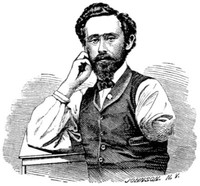
Read on Project GutenbergWilliam A. Canfield opens his 1869 memoir with a frank admission: he does not claim to write in “choice language” or to reveal new facts about the war. Instead, he aims to tell his own story as a soldier in the Army of the Potomac and Southwest, and in the hospital. The book was sold by himself for twenty-five cents, a practical measure after losing his left arm at Petersburg. From the start, Canfield’s voice is direct and unadorned, shaped by his stated purpose—to earn enough to support his family—and by a religious upbringing that surfaces in his early pages. The narrative that follows is a curious blend of precise itineraries, personal reflection, and sudden violence, all rendered in a tone that remains remarkably steady even when describing chaos.
Canfield’s preface sets the tone for the entire work. He writes that he does not “claim to issue a work of choice language,” and he keeps that promise. His sentences are short, his vocabulary unpretentious, and his transitions abrupt. Yet this plainness is not artless; it conveys a sense of honesty and urgency. He tells us he lost his arm and needs money to “engage in some business,” so the book itself is a tool for survival. The preface also reveals a man who sees his readers as potential benefactors, asking for “kind indulgence” and a “favorable reception.” This framing is crucial: the memoir is not a detached history but a personal appeal, and its language reflects that intimate, transactional relationship.
Much of the narrative is built around lists of place names and distances. Canfield records that his regiment marched “eighty-four miles” from Camp Nelson to Point Burnside, then “sixty miles” to London, then “fifty-six miles” to Cumberland Gap. He notes that he “wore out three pair of army shoes” on one tramp. These accumulations of miles and days create a hypnotic, weary rhythm. Then, without warning, the pace changes. At the Wilderness, the prose fractures: “It was impossible for our Commanding Chief to see but a small portion of the army.” Canfield cannot describe the “dreadful carnage” and instead focuses on the underbrush set on fire by shells. The contrast between the methodical march logs and the fragmented battle scenes is the memoir’s most striking structural feature.
Canfield’s religious upbringing appears early, when he recalls his parents “rich in faith” and a prayer meeting where he found God. Later, in Cynthiana, he attends four churches—“two black and two white”—and prefers the “smartest preacher” at a colored church. These moments of observation are rare but vivid. He also notes that local inhabitants called the war “a nigger war,” yet treated Union soldiers well. Canfield does not editorialize; he simply records what he saw and heard. This restraint is both a strength and a limitation. He tells us what happened to him, but rarely what he felt. The memoir’s power lies in what it leaves unsaid—the gaps between the orderly lists of miles and the chaos of battle, between the stated purpose of earning a living and the unstated cost of survival.
Readers should approach Canfield’s memoir as a document of personal testimony rather than a comprehensive history. The narrative’s value lies in its unpolished voice and the tension between its two modes: the steady, almost bureaucratic recording of marches and the fractured, overwhelmed descriptions of combat. Canfield’s stated goal—to sell his story—shapes every page, reminding us that this is a book written by a wounded man for a practical purpose. To read it is to hear a voice that is at once ordinary and extraordinary, a soldier speaking directly to us across more than a century.
There are moments in Canfield’s memoir—waiting in camp, the smell of coffee, the dread before dawn—that stay with you long after the fighting. That quiet hum of human endurance is what I found again in General Washington's spies on Long Island and in New York — Themes and Context. Different war, same lonely watchfulness. It makes me think history is mostly just people holding their breath together.
A brief reflection can help important ideas stay with you longer.