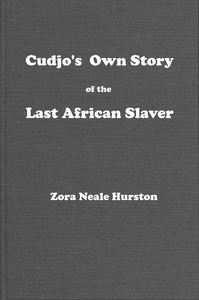
Zora Neale Hurston's 1927 article, originally published in The Journal of Negro History, opens with a precise geographical description of African Town, a settlement near Mobile, Alabama, situated on red clay bluffs at the mouth of Chickasabogue Creek. This grounding in place immediately establishes the work as a documentary account, but the narrative soon shifts to the voice of Cudjo Lewis, the last known survivor of the Clotilda, the final slave ship to arrive in the United States. Hurston records Cudjo's story in a blend of his vernacular speech and her own expository prose, creating a layered text that moves between historical context and personal testimony.
A Narrative in Two Registers
The article alternates between two distinct voices. Hurston's own prose is formal and journalistic, as when she describes the Meaher brothers' shipyard or quotes The Mobile Register of 1858. But when Cudjo speaks, the language shifts dramatically. His words are rendered in dialect: “We astonish to see de mule behind de plow to pull.” This contrast is not merely stylistic; it underscores the tension between the historical record and lived experience. Hurston does not smooth over Cudjo's syntax or vocabulary, allowing his perspective to emerge in its own rhythm. The effect is a narrative that feels both authoritative and intimate, as if the reader is overhearing a conversation.
The Mechanics of Capture and Transport
Hurston details the logistics of the slave trade with a reporter's eye. She explains how the King of Dahomey's warriors, including women warriors, raided peaceful agricultural tribes like the Togo people, who raised hogs, goats, and yams. The captives were then loaded onto the Clotilde, a fast vessel selected for its speed. After the ship's arrival in Alabama, the enslaved were transferred in darkness to a steamboat and taken to a plantation. Hurston notes the mutiny of the Northern crew, whom Captain Foster dispersed with a six-shooter in each hand. These details—the smothered lights, the whispered conversations, the hiding in swamps—build a chilling picture of the clandestine operation.
The Founding of African Town
After emancipation, the Africans wished to return home but lacked means. Instead, they saved wages from mill work and market gardening to buy land. The settlement they created, African Town, is described with stark realism: no pavement, no lighting, no mayor. Hurston records that the Meaher heirs still held much of the real estate. Yet the community persisted, its members industrious and home-owning. Cudjo's own voice surfaces in moments like the thrashing of an overseer by the women, a small act of resistance that Hurston includes without embellishment. The article ends not with triumph but with a quiet, unromanticized portrait of survival.
Readers should attend to the shifts in register between Hurston's framing and Cudjo's speech, as these reveal the power dynamics inherent in the act of recording history. The article is brief—under 9,000 words—but dense with specific detail about geography, economics, and daily life. It rewards careful reading of its footnotes and quotations, which ground Cudjo's story in a broader historical context without ever losing sight of the individual voice at its center.
I keep thinking about Cudjo’s quiet dignity, how he names the very ship that took everything. That ache for home lingers somewhere in all of us. It reminded me of a long, slow afternoon with The Soul of the War — Reading Companion, where the aftermath feels just as heavy as the event itself. Some stories stay with you, uninvited and tender.