Sister Carrie - Theodore Dreiser

(17 User reviews)   4057
By Brenda Hill Posted on Jan 27, 2026
In Category - Forensic Studies
Theodore Dreiser Theodore Dreiser
English
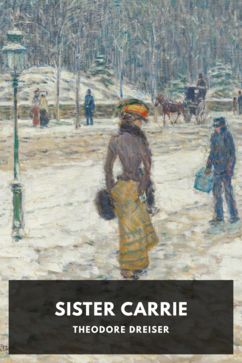
Hey, have you ever read a book that feels like watching a slow-motion train crash, but you can't look away? That's 'Sister Carrie' for you. It follows Carrie Meeber, an 18-year-old who hops a train from her small town to the roaring streets of Chicago with just a few dollars and big dreams. She wants a good life—nice clothes, a comfortable apartment, some excitement. The problem? In 1900s America, a young woman with no money or connections has very few ways to get those things. The book asks this brutal question: what are you willing to trade for a taste of the life you want? Carrie's journey is a series of compromises and choices, each one pulling her further from the girl she was. It's not a flashy thriller, but the tension comes from watching her navigate a world where love, money, and status are all tangled up. If you've ever wondered about the real cost of the American Dream, this classic will give you a lot to think about.
Share

Read "Sister Carrie - Theodore Dreiser" Online

This book is available in the public domain. Start reading the digital edition below.

START READING FULL BOOK
Instant Access    Mobile Friendly

Book Preview

A short preview of the book’s content is shown below to give you an idea of its style and themes.

some old play.’ This story explains the genesis of this book. Like John Gilpin’s wife, it seems that though on pleasure he was bent, he had a frugal mind. He did not forget business. When reading Ben Jonson or Beaumont and Fletcher he had pencil in hand, and whenever he came to a word that might prove a stumbling-block to the general reader, he noted that word, and eventually wrote it on a separate slip (note-paper size) with exact reference and explanation. In July, 1911, in Oxford, when we were together for the last time, the professor told me about the book he was preparing—mainly consisting of the words he had collected in reading the Tudor and Stuart dramatists. He did not intend it to be a big book. When I asked whether it would contain quotations like Nares’ Glossary, he said it would contain only a few quotations, and those short ones, and would consist mostly of explanations and references, with brief etymologies. I heard no more of the book during his lifetime. But frequent letters passed between us on the etymologies of English words, many of which he was meeting with in the material he was collecting. On October 6, 1912, that eager, enthusiastic spirit passed away, to the regret of all who work in the field of English philology, of all who love the English tongue, wherever on this habitable globe they may chance to live. Not long after, in November, I heard from Mrs. Skeat that her husband had left material for a Glossary of Rare Words, in slips amounting to nearly 7,000, arranged in alphabetical order, and that Professor Skeat’s executors would be very glad if I would be able to edit and prepare the work for publication. I agreed to do this, on condition that the executors should ask the advice of a pupil of Dr. Skeat, an eminent English scholar, and also, of course, that the Delegates of the Clarendon Press would consent to the arrangement. On December 4 I received a letter from the Clarendon Press, informing me that the Delegates accepted my offer. A day or two after the box containing the MS. arrived, and on December 9 I addressed myself to the task. With the exception of a short intermission in July, the work has had my continuous and undivided attention for one year. On examination of the MS. it appeared that, although Professor Skeat had arranged the material in the form of a Glossary, he had not put the finishing touches to the book (many slips were practically duplicates or triplicates), and had not even finally limited the scope: the title of the book was not settled. And now it will be proper to state as clearly as possible what the Editor thought it his duty to do in preparing his friend’s work for publication. In the first place he did not think that it fell within his province to make any considerable addition to the Word-list. The Vocabulary remains much as Professor Skeat left it. But it was found necessary, in going over the work, to make additions in many articles, in order to explain the history of the word, or to illustrate its meaning; connecting links had to be supplied, where the meanings of a word apparently had no connexion with one another. In this part of the work the Editor found great help in the New English Dictionary; and it will be seen that there is hardly a page of this book on which there does not occur the significant abbreviation (NED.). With the same help...

This is a limited preview. Download the book to read the full content.

So, let's talk about this book that's over a century old but still feels incredibly relevant. Sister Carrie is a story about wanting more, and the complicated, often messy, paths we take to get it.

The Story

We meet Carrie Meeber as she's leaving her boring hometown for Chicago, full of hope. Reality hits fast. Her sister's cramped apartment and a miserable factory job are a far cry from the glamour she imagined. When she meets Charles Drouet, a smooth-talking salesman, she sees an escape. Moving in with him is a scandal, but it gives her comfort. Then she meets George Hurstwood, a married man who manages a fancy bar. He's older, established, and utterly captivated by her. In a moment of desperate impulse, Hurstwood steals money from his job and convinces Carrie to run away with him to New York. Their fresh start quickly sours. As Hurstwood's luck and spirit crumble, Carrie's begins to rise in a surprising way. Their fiverse dramatically, showing two very different sides of ambition and survival.

Why You Should Read It

Here's the thing: Carrie isn't a typical 'heroine.' She's often passive, makes questionable choices, and is driven by a desire for nice things. But that's what makes her so fascinating. Dreiser doesn't judge her; he just shows us her world and her limited options. You watch society's rules box her in, and then you watch her find cracks in the walls. The real star of the book might be the cities themselves—Chicago and New York are like living, breathing characters. They're full of temptation, loneliness, and relentless energy. This book made me think hard about how much our environment shapes our desires and our morals.

Final Verdict

This is perfect for anyone who loves character-driven stories that double as a slice of social history. If you enjoyed the gritty realism of authors like Stephen Crane or the complex women in Edith Wharton's novels, you'll find a lot to love here. It's not a feel-good read, but it's a profoundly human one. Be prepared for a narrative that moves at its own deliberate pace and for characters who will frustrate you as much as they fascinate you. Sister Carrie is a classic for a reason—it holds up a mirror to our own wants and asks us how we're going about getting them.


ℹ️ Community Domain

The copyright for this book has expired, making it public property. It is now common property for all to enjoy.

Kevin Walker
1 month ago

To be perfectly clear, the emotional weight of the story is balanced perfectly. Highly recommended.

Kevin Hernandez
9 months ago

Thanks for the recommendation.
Paul Martin
1 year ago

To be perfectly clear, it creates a vivid world that you simply do not want to leave. I would gladly recommend this title.

Jackson Rodriguez
7 months ago

Without a doubt, it manages to explain difficult concepts in plain English. One of the best books I've read this year.

Kevin Gonzalez
1 year ago

If you enjoy this genre, the flow of the text seems very fluid. I couldn't put it down.

5
5 out of 5 (17 User reviews )

Add a Review

Your Rating *
There are no comments for this eBook.
You must log in to post a comment.
Log in


Related eBooks