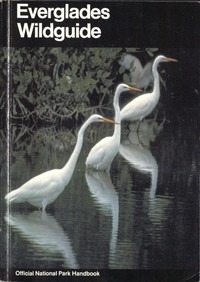
Everglades Wildguide by Jean Craighead George

(38 User reviews)   9811
By Brenda Hill Posted on Dec 21, 2025
In Category - Forensic Studies
George, Jean Craighead, 1919-2012 George, Jean Craighead, 1919-2012
English
Hey, have you ever wanted to explore the Everglades but felt like you needed a guide who could whisper its secrets? This isn't your typical nature guide. Jean Craighead George's 'Everglades Wildguide' is that friend. It doesn't just list plants and animals; it introduces you to the whole, breathing system of the 'River of Grass.' You'll discover how an alligator's presence creates life for birds, why sawgrass is so sharp, and how fire and water shape this unique world. It transforms a swamp from a mysterious, maybe even scary, place into a fascinating neighborhood where every creature and plant has a vital role. It's the key to understanding one of America's most incredible natural wonders.
Share

Read "Everglades Wildguide by Jean Craighead George" Online

This book is available in the public domain. Start reading the digital edition below.

START READING FULL BOOK
Instant Access    Mobile Friendly

Book Preview

A short preview of the book’s content is shown below to give you an idea of its style and themes.

back buttress her account of the natural history of this national park. National Park Handbooks, compact introductions to the great natural and historic places administered by the National Park Service, are published to support the National Park Service’s management programs at the parks and to promote understanding and enjoyment of the parks. Each is intended to be informative reading and a useful guide before, during, and after a park visit. More than 100 titles are in print. This is Handbook 143. You may purchase the handbooks through the mail by writing to Superintendent of Documents, U.S. Government Printing Office, Washington, DC 20402. _Library of Congress card number: 73-600077_ ISBN 0-912627-29-8 ★GPO: 1987—181-917/60504 Preface vii America’s Subtropical Wonderland 1 Pine Rockland 7 Tree-Island Glades 12 Mangrove Swamp 16 Florida Bay and the Coastal Prairie 21 Big Cypress Swamp 26 Plant-and-Animal Communities 29 Tropical Hardwood Hammock 30 Cypress Head 35 Bayhead 38 Willow Head 40 Web of Life in the Marsh 42 Alligator Hole in the Glades 45 Discovering Everglades Plants and Animals 49 Air Plants 52 Mammals 59 Birds 64 Reptiles and Amphibians 70 Fishes 72 Animals without Backbones 75 Indians of the Everglades 77 Appendix 80 Glossary 81 For Reading and Reference 84 Rare and Endangered Animals 86 Checklist of Mammals 87 Checklist of Birds 88 Checklist of Reptiles and Amphibians 96 Checklist of Trees 98 [Illustration: EVERGLADES NATIONAL PARK] [Illustration: Alligator nest] PREFACE The shimmering waters of the everglades creep silently down the tip of Florida under warm subtropical skies. In a vast, shallow sheet this lazy river idles through tall grasses and shadowy forests, easing over alligator holes and under bird rookeries, finally mingling with the salty waters of Florida Bay and the Gulf of Mexico in the mangrove swamps. From source to sea, all across the shallow breadth of this watery landscape, life abounds. Everglades National Park is to most Americans an Eden where birds, mammals, reptiles, and orchids find sanctuary. Sunshine sparkles on sloughs teeming with fish, and on marshes where wildflowers bloom the year around; it shines on tree islands where birds roost and deer bed down. In this semitropical garden of plant-and-animal communities, every breeze-touched glade, every cluster of trees is a separate world in which are tucked yet smaller worlds of such complexity that even ecologists have not learned all their intricate relationships. This book has been written to help you see how the many pieces of this ecological puzzle fit together to form a complex, ever-changing, closely woven web of plants, animals, rock, soil, sun, water, and air. AMERICA’S SUBTROPICAL WONDERLAND Everglades may not be our largest national park (that honor belongs to Wrangell-St. Elias in Alaska), but it is certainly the wettest. During and after the rainy season, when not only the mangrove swamp but also the sawgrass prairie is under water, most of the park abounds in fish and other water life, and even the white-tailed deer leads a semi-aquatic existence. Despite the fact that it is low, flat, and largely under water, Everglades is a park of many environments: shallow, key-dotted Florida Bay; the coastal prairie; the vast mangrove forest and its mysterious waterways; cypress swamps; the true everglades—an extensive freshwater marsh dotted with tree islands and occasional ponds; and the driest zone, the pine-and-hammock rockland. The watery expanse we call “everglades,” from which the park gets its name, lies only partly within the park boundaries. Originally this river flowed, unobstructed though very slowly, southward from Lake Okeechobee more than 100 miles to Florida Bay. It is hardly recognizable as a river, for it is 50 miles wide and...

This is a limited preview. Download the book to read the full content.

Forget dry lists of species. Jean Craighead George's Everglades Wildguide is an invitation to a living, breathing world. It reads like a guided tour from a wise and enthusiastic naturalist who wants you to see the connections.

The Story

There isn't a fictional plot, but there is a journey. The book walks you through the Everglades ecosystem, from the sawgrass prairies and cypress domes to the coastal mangroves. George explains how this vast, slow-moving sheet of water functions as a single organism. She shows you the alligator's role as a keystone species, creating 'gator holes' that become oases in the dry season. She introduces the delicate balance between the apple snail and the endangered snail kite, and reveals how seasonal fires are a necessary part of life, not just destruction.

Why You Should Read It

What makes this book special is George's gift for storytelling with facts. She makes ecology exciting. You don't just learn what a plant is called; you learn its story and its job in the community. After reading it, you won't just see a swamp—you'll see a complex, interconnected web of life. It gives you a profound appreciation for a place that's often misunderstood, and it does so with clear, accessible language that feels like a conversation.

Final Verdict

Perfect for curious travelers planning a trip to Florida, families who want to make a nature walk more meaningful, or anyone who enjoys understanding how the natural world fits together. It's a classic for a reason—it turns a field guide into a page-turner about one of the planet's most fascinating places.


🔓 Public Domain Content

This publication is available for unrestricted use. It is available for public use and education.

Daniel Williams
1 year ago

To be perfectly clear, the author's voice is distinct and makes complex topics easy to digest. A true masterpiece.

Emma Allen
1 year ago

Citation worthy content.

Emma Lopez
1 year ago

Finally a version with clear text and no errors.

Barbara Gonzalez
1 year ago

I was skeptical at first, but the flow of the text seems very fluid. Absolutely essential reading.

Jackson Thompson
1 year ago

Loved it.

5
5 out of 5 (38 User reviews )

Add a Review

Your Rating *
There are no comments for this eBook.
You must log in to post a comment.
Log in


Related eBooks