About 244 minutes
Reminiscences of an army nurse during the Civil War — Background and Themes
Modern Nations
55,948 recorded words. 7 minutes difference from this book's estimate.
View Gutenberg source #74812
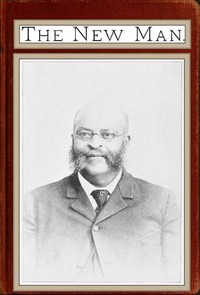
The catalog record for The New Man: Twenty-nine years a slave, twenty-nine years a free man — Story, Setting & Ideas provides practical reading context through 54,494 words, 3 hr 57 min estimated reading time, and 5 detected text sections.
The text analysis averages about 27.2 words per sentence, while the detected sections provide another way to judge how the source is divided.
Project Gutenberg metadata also associates the work with “African Americans -- History -- 1877-1964,” connecting these edition facts with the source record’s subject description.
Explore this collection
These alternatives are selected using recorded categories and estimated reading time.
About 244 minutes
Modern Nations
55,948 recorded words. 7 minutes difference from this book's estimate.
View Gutenberg source #74812About 220 minutes
Modern Nations
50,569 recorded words. 17 minutes difference from this book's estimate.
View Gutenberg source #11232About 203 minutes
Modern Nations
46,656 recorded words. 34 minutes difference from this book's estimate.
View Gutenberg source #11394Search stored excerpts and compare books → Choose by your preferences →
Choices use stored catalog measurements. Estimates vary with reading speed. A shared category is a catalog label, not a claim that two books have the same argument or literary quality.
Search reads excerpt text stored with this catalog and links to its associated Gutenberg record. The connection is stored in the site database; this tool does not recheck that every excerpt is word-for-word identical to that external record. Excerpt search does not cover every chapter and does not verify historical publication dates.
Catalog snapshot checked: 2026-09-25. Coverage: 91 public books, 91 available source excerpts.
Read the complete public-domain text at its original source.
Read on Project GutenbergHenry Clay Bruce opens his 1895 memoir with a preface that declares an intention to present an “impartial and unprejudiced view” of slavery, a claim that immediately sets his narrative apart from many contemporary accounts. He acknowledges that “all masters were not cruel” and that slaves themselves were divided into classes—some “would have suffered death rather than submit to dishonor,” while others were “lazy and mean.” This early taxonomy of character, applied to both races, establishes a voice that is analytical rather than aggrieved.
Bruce’s prose is measured, almost legalistic, as he dissects the political machinery that led to the Civil War. In the excerpts, he devotes careful attention to the 1860 Democratic convention, quoting resolutions verbatim and tracing the split that allowed Lincoln’s election. His recollection of a barbecue near Brunswick, where his “young master made his maiden effort for Bell and Everett,” grounds national events in local detail.
Bruce’s preface is a deliberate rhetorical performance. He insists that “freedom has been sweet indeed” and prays for “grace to forget the past,” yet the body of the text does not forget—it catalogues. The preface’s claim to impartiality is itself a political stance, one that allows Bruce to critique both cruel masters and “mean, trifling lazy slaves” without appearing partisan. He frames his authority on having been “peculiarly fortunate” in his enslavement, a qualification that limits his experience even as it bolsters his credibility.
This opening gambit shapes the reader’s expectations. Bruce is not offering a harrowing escape narrative but a considered judgment, one that weighs evidence. He writes of “good blood” manifesting in “honor and ability” across skin colors, a phrase that echoes racial science while subverting it. The preface’s measured tone is a deliberate choice, distancing the author from the “heart burnings and cruelties” he describes.
In the excerpts, Bruce shifts from personal recollection to a detailed account of the 1860 Democratic convention, quoting the majority and minority resolutions on slavery in the territories. He notes that Missouri “stood solid in the Douglas column” and analyzes the split that led to Lincoln’s victory. His language is precise: “the main fight was upon the second section of the majority report.” He attributes the Democratic fracture to “hatred” between northern and southern factions, with southerners denouncing their northern counterparts as “doughfaces.”
Bruce’s political analysis is not detached; he inserts a providential interpretation, suggesting “a higher power shaping matters.” Yet he also offers a practical counterfactual: if the party had not split, Douglas would have won. This blend of divine will and political calculation is characteristic of his narrative voice. The local color—a barbecue, a young master’s speech—anchors the national story in Chariton County, Missouri.
Bruce’s taxonomy of slaves is one of the most striking features of the excerpts. He divides the enslaved into two classes: those who “would not submit to punishment, but would fight or run away rather than be whipped,” and those who were “lazy and mean,” “untrue to their fellows.” This classification mirrors his division of whites into “brutal masters” and those who provided “fatherly care.” The parallel is explicit: “just as the whites were divided into two great classes, so the slaves were divided.”
This framework serves multiple purposes. It allows Bruce to acknowledge resistance without glorifying it, and to condemn collaboration without excusing slavery. The language of “good blood” and “honor” applies across racial lines, suggesting a universal standard of virtue. Yet the excerpts do not reveal how Bruce himself navigated these categories; his own status as a “fortunate” slave remains asserted rather than demonstrated in the provided text.
Bruce repeatedly uses specific local events to illuminate larger historical forces. The barbecue “five miles north of town” where speeches were made for every ticket except the Republican is a small stage for national drama. His young master’s “maiden effort” for the Constitutional Union ticket personalizes the political stakes. Later, he notes that after Lincoln’s election, “all differences were healed and the factions came together, declaring for secession,” joined by former Whigs.
This method gives the narrative a granular texture. Bruce recalls the “bulldozing, the taunts, jeers and epithets” faced by Union loyalists, and marvels that they remained steadfast. His perspective is that of an observer who was both inside and outside the events—enslaved, yet privy to political conversations. The excerpts do not clarify how he gained this access, but the effect is a memoir that reads like a local history written by a participant.
Bruce’s memoir resists easy categorization. It is neither a conventional slave narrative nor a dry political history, but a hybrid that uses personal experience as a lens for structural analysis. Readers should attend to the tension between his prefatory claims of impartiality and the judgments embedded in his prose. The excerpts suggest a writer who is always calculating his effect, balancing memory with argument. The full text likely extends this method across the full arc of his twenty-nine years in slavery and twenty-nine in freedom.
Reading Henry Clay Bruce’s patient tally of slave and free years, I found myself thinking of how different times ask for different witnesses. His careful, lawyerly weighing of the 1860 convention felt so quiet, so measured. It drifted me toward Out To Win: The Story of America in France — Inside the Classic, another record of ordinary men caught in vast movements. Both feel like letters mailed home, not speeches.
Create a short personal record of your experience with this book.