
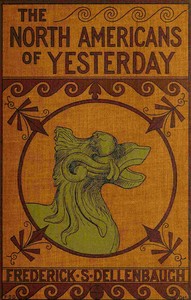
The North-Americans of yesterday : a comparative study of North-American…
Read "The North-Americans of yesterday : a comparative study of North-American…" Online
This book is available in the public domain. Start reading the digital edition below.
Book Preview
A short preview of the book’s content is shown below to give you an idea of its style and themes.
Full disclosure: I picked up “The North-Americans of Yesterday” because a dusty old library copy looked like it might explode with moth dust. Glad I did. Frederick Dellenbaugh wasn’t some stuffy professor—he was an explorer who actually went out and talked to elders, crisscrossed the continent, and had the nerve to write like you’re sitting in his living room.
The Story
It’s not a story in the traditional sense. Think of it as a vivid snapshot album: chapters on how tribes from the Arctic to the Gulf of Mexico build homes (surprise tipis are actually inflatable?), what they eat, their weapons, and the mind-blowing trade routes that connected places long before highways. Example? The Haida of the Pacific Northwest carved totem poles that held a family’s entire history—their version of a documentary series. Dellenbaugh dives into everything from dentalium shell money to how they kept time without clocks. It’s less like reading history and more like exploring a museum collection with a hyper-interesting guide who actually likes stories over dates.
Why You Should Read It
Honestly, the coolest part isn’t the facts—it’s the questions he leaves you with. He wonders aloud about hidden languages, lost technologies, and why so many tribes had similar songs miles apart. You get this palpable sense of mystery: why did certain fishhooks look almost exactly the same from Alaska to Florida? He treats these people as guys with serious intelligence, not “savages,” which rocked my 21st-century assumptions. Fair warning: his 1921 language is a tad outdated in spots (plenty of labels we’d whisper about today), but boy, does he respect the communities. Plus, you’ll walk away with trivia to bore in-laws—did you know some tribes predicted weather by observing bumblebees?
Final Verdict
This book’s your ticket if you’re that person who gets lost in a visitor center but hates closed captions. It’s perfect for casual history buffs, travelers who love Indigenous sites, and anyone with a quiet curiosity about how humans live before Amazon convenient delivery. If you can stomach occasional old-school phrases, you’ll be rewarded with a treasure trove of everyday ingenuity that Western history books forgot.
This book is widely considered to be in the public domain. Thank you for supporting open literature.
Emily Hernandez
1 year agoI was particularly interested in the case studies mentioned here, the author’s unique perspective adds a fresh layer to the discussion. I’ll definitely be revisiting some of these chapters again soon.
John Smith
5 months agoAs a professional in this niche, the case studies and practical examples provided add immense value. Highly recommended for those seeking credible information.
Richard Harris
6 months agoAs a professional in this niche, the author manages to bridge the gap between theory and practice effectively. Simple, effective, and authoritative – what else could you ask for?
Patricia Thomas
8 months agoI've gone through the entire material twice now, and it addresses the common misconceptions in a very professional manner. It’s a comprehensive resource that doesn't feel bloated.




Matthew Davis
2 months agoIt’s rare to find such a well-structured narrative nowadays, the visual layout and supporting data make the reading experience very smooth. Well worth the time invested in reading it.