About 283 minutes
War and the Future: Italy, France and Britain at War — A Closer Reading
Social History
65,057 recorded words. 40 minutes difference from this book's estimate.
View Gutenberg source #1804
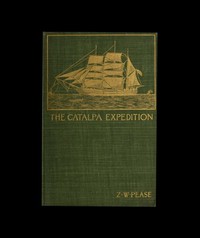
The catalog record for The Catalpa Expedition — A Closer Reading provides practical reading context through 55,689 words, 4 hr 3 min estimated reading time, and 6 detected text sections.
The text analysis averages about 19.3 words per sentence, while the detected sections provide another way to judge how the source is divided.
Project Gutenberg metadata also associates the work with “Fenians,” connecting these edition facts with the source record’s subject description.
Explore this collection
These alternatives are selected using recorded categories and estimated reading time.
About 283 minutes
Social History
65,057 recorded words. 40 minutes difference from this book's estimate.
View Gutenberg source #1804About 185 minutes
Social History
42,324 recorded words. 58 minutes difference from this book's estimate.
View Gutenberg source #10159About 181 minutes
Social History
41,576 recorded words. 62 minutes difference from this book's estimate.
View Gutenberg source #10080Search stored excerpts and compare books → Choose by your preferences →
Choices use stored catalog measurements. Estimates vary with reading speed. A shared category is a catalog label, not a claim that two books have the same argument or literary quality.
Search reads excerpt text stored with this catalog and links to its associated Gutenberg record. The connection is stored in the site database; this tool does not recheck that every excerpt is word-for-word identical to that external record. Excerpt search does not cover every chapter and does not verify historical publication dates.
Catalog snapshot checked: 2026-09-25. Coverage: 91 public books, 91 available source excerpts.
Read the complete public-domain text at its original source.
Read on Project GutenbergZ. W. Pease opens The Catalpa Expedition by stating that the story is told as Captain George S. Anthony would want it told: simply, without embellishment. This plainness is a deliberate authorial choice, not a lack of skill. Pease lets the logistics of the rescue—the secret meetings, the timing of the whaleboat rendezvous, the navigation of colonial steamers—drive the narrative. The prose is lean, favoring concrete actions over emotional commentary. When Breslin grasps Anthony's hands with a hearty "How are you?" on a dark jetty, the moment is rendered with restraint, trusting the reader to feel the tension. The author's voice is that of a chronicler, not a dramatist, and the effect is a story that feels reported rather than invented.
Pease's vocabulary is workmanlike, avoiding ornate or literary flourishes. He describes the Catalpa as a bark, the men as prisoners, the plan as a conspiracy. There is no attempt to elevate the language to match the heroism of the event. This plainness is consistent with the book's origin: it is authorized by Captain Anthony, a whaling captain, and Pease seems to adopt the commander's own no-nonsense tone. For example, when Brennan stows away and is discovered, Pease writes that the captain of the Selbourne "made them prisoners, believing they were criminals fleeing from punishment." The sentence is direct, almost flat, yet it conveys the danger without melodrama. The author's refusal to embellish suggests a trust in the inherent drama of the facts.
Dialogue in the excerpts is sparse and always serves the plot. When Breslin meets Anthony on the jetty, the exchange is brief: "Then he told the captain of his fears, consequent upon the tardiness of the vessel in arriving, and then quickly outlined the plan." Pease does not render the conversation in full; he summarizes it, focusing on the essential information. The only direct speech is Breslin's "How are you?"—a greeting that carries the weight of months of anxiety. This technique keeps the narrative moving and avoids the kind of invented dialogue that might feel fictional. The author's restraint here is a mark of his commitment to verifiable reportage, even at the cost of dramatic color.
Pease organizes the narrative around precise dates and times, a choice that reinforces the documentary feel. The rescue is set for "Thursday, April 6"; the steamer Georgette sails on "April 1"; Brennan's escape from quarantine happens "the next day." These details are not merely decorative; they create a sense of ticking clock. The author also includes logistical specifics—the whaleboat, the rendezvous at Rockingham, the distance of "about twenty miles south of Freemantle"—that ground the story in geography. By foregrounding the when and where, Pease makes the reader feel the conspirators' constant calculation of risk. The structure mirrors the planning itself: methodical, step-by-step, with each date a potential point of failure.
Throughout the excerpts, a recurring concern is the danger of arousing suspicion. When Brennan arrives unexpectedly, Pease notes that "neither Breslin nor Anthony were overjoyed at the meeting" because "each addition to the party only increased the chances of arousing suspicion." Similarly, Anthony is introduced as the guest of "Mr. Collins" on the steamer, and Brennan is to be a stranger. The author repeatedly highlights the conspirators' need to maintain cover—Anthony cultivates Captain O'Grady's friendship to study the coast without raising questions. This motif of concealment is woven into the narrative's fabric, reminding the reader that the rescue depended not only on boldness but on constant, quiet vigilance. Pease's understated prose mirrors this need for discretion.
Readers should approach The Catalpa Expedition as a primary-source document as much as a narrative. Pease's reliance on Anthony's log-book and personal records means that the book is filtered through the captain's perspective, but the author's plain style allows the facts to speak. Pay attention to what is not said—the emotions left unstated, the dangers implied rather than declared. The book rewards those who read for the small, telling details: a handshake in the dark, a missed steamer, a quarantine that nearly derails the plan. These are the moments that reveal the texture of the conspiracy.
Years at the desk have taught me that quiet books often share a hidden breath. The plain, deliberate log of the Catalpa rescue never raises its voice, yet it swells with patient defiance. Beside it, England and the War — Background and Themes whispers of the same measured, unsentimental resolve in different dress—two souls tolerating no noise, only faith in just work. Such kinship is a gentle comfort.
Use these questions to collect your thoughts before moving on.