
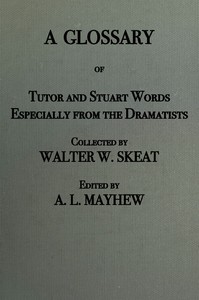
A glossary of Tudor and Stuart words, especially from the dramatists by Skeat
Read "A glossary of Tudor and Stuart words, especially from the dramatists by Skeat" Online
This book is available in the public domain. Start reading the digital edition below.
START READING FULL BOOKBook Preview
A short preview of the book’s content is shown below to give you an idea of its style and themes.
So, what exactly is this book? It's not a novel with a plot. Think of it as a field guide, but instead of birds or plants, it catalogs the wild and wonderful words used between about 1485 and 1714, with a special spotlight on the playwrights of the time. Walter Skeat, a giant in the study of word origins, didn't just list definitions. He gathered thousands of terms from plays, pamphlets, and other writings that had fallen out of daily use. The 'story' here is the story of the English language itself, caught in a period of dramatic change and incredible creativity.
The Story
The book is organized like a dictionary, from A to Z. You'll find entries for words that make you laugh (a 'gundygut' was a glutton), words that sound magical ('elritch' meant fairy-like or haunted), and words that are just plain confusing ('ake' was an old form of 'ache'). Skeat often includes a short quote from a writer like Shakespeare, Ben Jonson, or John Fletcher to show the word in action. There's no narrative, but there is a clear mission: to rescue these words from obscurity and help modern readers unlock the full meaning—and humor—of classic texts.
Why You Should Read It
I love this book because it makes the past feel alive and noisy. It reminds you that language isn't set in stone. People back then had slang, insults, and silly words just like we do. Finding out that 'kicksy-wicksy' was a playful (or sometimes annoyed) term for a wife, or that 'smell-smock' was a word for a lecherous man, adds a layer of humanity to history. It's not just about kings and queens; it's about how regular people joked, argued, and described their world. Dipping into this glossary gives you a new appreciation for the writers of the time, who had this huge, colorful palette of words to paint with.
Final Verdict
This is a perfect book for curious minds, not just academics. If you're a fan of Shakespeare, Renaissance drama, or historical fiction set in this period, keep this on your shelf as an essential companion. It's also great for word nerds, writers looking for unique vocabulary, or anyone who enjoys the oddities of history. It's not a book you read cover-to-cover, but one you browse. Open it to any page, and you're guaranteed to find something fascinating, funny, or wonderfully strange. A true gem for unlocking the voices of the past.
This text is dedicated to the public domain. Feel free to use it for personal or commercial purposes.
Robert Smith
5 months agoI stumbled upon this title during my weekend research and the evidence-based approach makes it a very credible source of information. This exceeded my expectations in almost every way.
Ashley Gonzalez
1 year agoI've gone through the entire material twice now, and the logic behind each conclusion is easy to follow and verify. This adds significant depth to my understanding of the field.
Kimberly Martin
11 months agoI decided to give this a try based on a colleague's recommendation, the bibliography and references suggest a high level of research and authority. Highly recommended for those seeking credible information.
Joseph Garcia
4 months agoSolid information without the usual fluff.



Linda Brown
2 years agoI was skeptical about the depth of this book at first, but the narrative arc keeps the reader engaged while delivering factual content. A refreshing and intellectually stimulating read.